
Aviation
One platform for cleaning, restrooms, and passenger experience across the terminal.
INDUSTRIES · AVIATION
Smarter airport operations. Better passenger experiences.
Turn daily airport activity into insight your teams can act on. TRAX connects cleaning operations, facility conditions, and passenger feedback to help you anticipate labor needs, plan operating costs, and respond as conditions change. Give frontline teams, department leaders, and airport executives a clearer view of the operation.

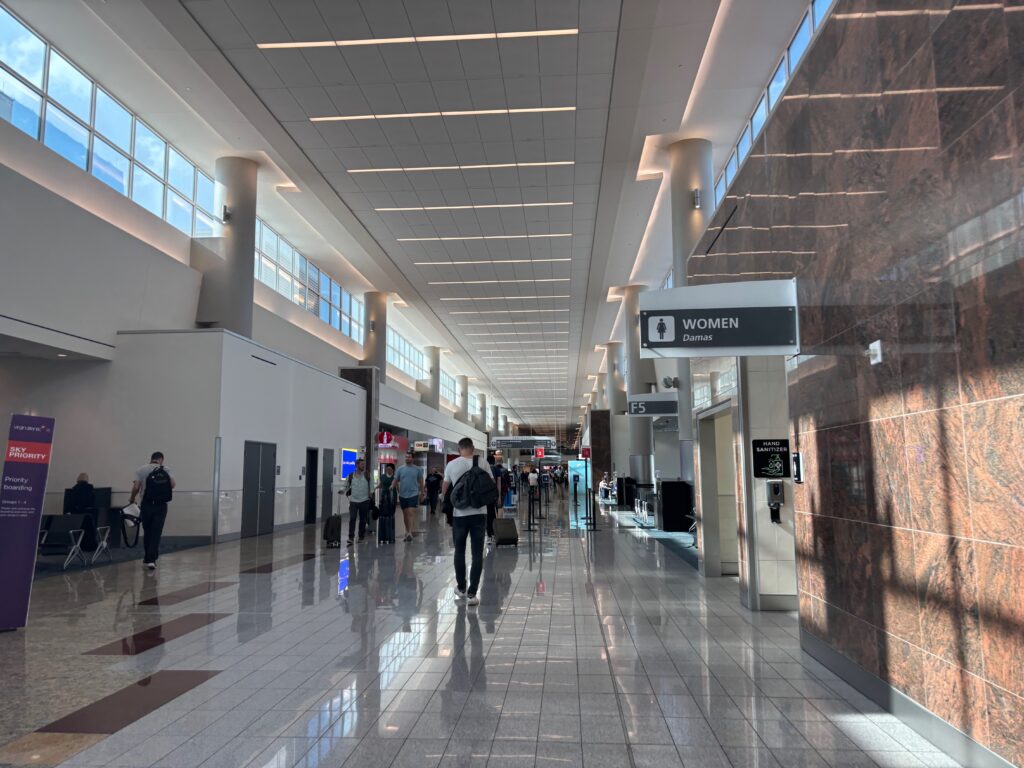
EXPERIENCE AT LEADING AIRPORTS
Airport facility management software, built around your operation.
We work closely with airport operators and service partners to turn operational priorities into practical data collection, workflows, and reporting.
TRAX supports 65+ airports across the U.S. and abroad, including Dallas Fort Worth International, Denver International, and Miami International — three of the ten busiest airports in the United States by passenger boardings.
One shared operational view shows:
- What happened during the last shift
- What needs attention now
- Where demand recurs by location and shift
- How quickly teams respond to issues
- How inspection results are trending
- What passengers are reporting
The result is information that helps teams improve daily performance and gives leadership a stronger basis for resource and cost planning.
FROM TERMINAL SIGNAL TO FRONTLINE ACTION
A dashboard doesn't clean a concourse.
Someone has to act on the information.
TRAX does not replace the frontline workforce. It gives that workforce better information to help them operate more productively.
- A restroom passes a traffic threshold between banks.
- A dispenser is running low in a holdroom.
- A passenger reports an issue at a feedback point.
- An inspection identifies a deficiency.
- A service request is submitted.
- A supervisor sees a concourse filling ahead of schedule.
TRAX turns those signals into tasks, routes, and corrective actions for the teams working the terminal, and captures the record as the work happens.
Frontline staff know what needs attention. Supervisors see the work happening across the terminal. Service partners and airport leadership review the same record.
ANTICIPATE DEMAND. PLAN LABOR WITH CONFIDENCE.
Staff the terminal you actually operate.
Two restrooms with the same fixture count are not the same amount of work. Concourse length, gate-area spread, landside and airside access, traffic when the crew arrives, and the walk between assignments all change how long the work actually takes.
Task activity, service times, and inspection results show recurring demand by location and shift. Where throughput counters are deployed, traffic adds to that picture. Where flight data is integrated, so do arrival and departure patterns.
With it, teams can:
- Build and manage routes around terminals, concourses, and shifts
- Forecast labor requirements by location and shift
- Plan coverage around expected demand
- Identify repeat visits and replenishment patterns
- Compare route performance against service times and completion history
Facility service providers operate in an environment where labor availability, service expectations, and contract margins all matter. The objective isn’t simply to assign more work. It’s to deploy available labor and resources more intelligently.
ONE PLATFORM. MULTIPLE WAYS TO DEPLOY.
A deployment built for your airport.
Every airport is different — its terminals, concourses, service partners, operating windows, and technology stack.
TRAX is modular by design and hardware-agnostic. Start with the workflows and information your operation needs. Add connected devices, analytics, and integrations as your goals and scope evolve.
Start with software, expand into selected locations, or plan a broader terminal rollout. Hardware compatibility, data availability, integration requirements, and success measures are confirmed during discovery.
Clean+Inspect
Frontline operations in one application.
Tasks, routes, inspections, issue reporting, service requests, corrective actions, and documented service activity for frontline teams, supervisors, and service partners — configured around your terminals, concourses, and shifts.
TRAX IQ
Operational reporting your departments can use.
Trends in cleaning activity, response times, inspection results, traffic, consumables, and feedback, broken out by terminal, concourse, location, and shift to support performance reviews and resource planning.
SmartRestroom
Demand data from the terminal’s most visible space.
When SmartRestroom technologies are deployed, throughput counters measure traffic at monitored entrances and areas, and occupancy sensors report restroom or stall status. Digital signage displays restroom availability or other approved information when integrated.
Connected Consumables
Replenish based on need — not a fixed round.
When connected dispensers are installed, TRAX reports consumable levels and sends configured refill alerts from supported devices, so teams prioritize replenishment instead of checking every dispenser on the concourse.
PASSENGER FEEDBACK
Connect the passenger experience to the operation.
Supported feedback tablets and QR-based tools capture passenger input at designated locations, tied to the location and time it occurred. Teams review it alongside service activity to prioritize follow-up and identify recurring concerns.
STAFF LOCATION & PROOF OF SERVICE
A clearer record of where service teams have been working.
Where location technology is included, Bluetooth badges and beacons associate service activity with a location to support verification workflows across large terminals.
Integrations
Work inside the technology your airport already has.
Through supported APIs and integrations, TRAX can connect with select work-order, building-management, dispenser, sensor, and business-intelligence systems. Integration requirements are scoped during discovery.
CONNECTED AIRPORT ECOSYSTEM
Make facility data work across your airport.
TRAX works closely with airports to improve how operational data is collected, organized, and shared. Through supported APIs and integrations, service activity, facility conditions, and passenger feedback can feed other airport systems.
Operations and service providers prioritize daily work, adjust coverage, and review service activity against demand. Facilities and maintenance teams share reported issues with connected work-order or building systems. Passenger experience teams use feedback and service trends to identify recurring concerns. Finance and airport leadership use operational reporting and connected business-intelligence tools to inform resource plans, budgets, and performance reviews.
For example, traffic and service data can help operations reprioritize cleaning while a reported fixture issue is shared with a connected maintenance workflow. Data sources, receiving systems, and update frequency are defined with your team, and real-time decisions depend on the connectivity and capabilities of the agreed integrations.
MAKE SERVICE PERFORMANCE VISIBLE
Change the conversation with your customer.
Know what happened on the terminal floor.
Supervisors get a clear record of assigned work, completed tasks, inspections, and documented issues — captured as the work happens, not reconstructed after the shift.
Instead of reporting:
- The restrooms were serviced on schedule.
Show airport leadership:
- Here is what happened on the terminal floor.
- Here is where traffic peaked.
- Here is where the team responded.
- Here is what passengers reported.
- Here is how quickly issues were resolved.
- Here is how inspection performance changed.
The same record supports service-provider reviews and shows where improvement efforts matter most.
$300,000 in inventory savings. Six months. Houston.
Houston Airport System used TRAX to improve visibility into restroom operations and consumable usage. TRAX’s published case summary reports $300,000 in inventory savings within six months, illustrating how operational data can support purchasing decisions and waste reduction.

MORE THAN SOFTWARE
Plan together.
Deploy with operational readiness.
How an airport deployment works
Demo
Bring us one concourse, a restroom program, or a terminal-wide challenge, along with the systems you already run. We will show you how TRAX could be configured around that environment.
Scope
Together, we confirm locations, workflows, devices, integrations, stakeholder responsibilities, site readiness, and how success will be measured. Pricing follows the agreed scope.
Implementation
TRAX coordinates configuration, project management, scoped integrations, and hardware installation where included, phased around airport access, badging, and operating windows.
Training
Workflows and data are validated with stakeholders before go-live. Frontline staff, supervisors, and service partners are trained on the tools relevant to their roles, with ongoing education available through TRAX Academy.
Support
Ongoing technical support as scoped in your agreement, with on-site services and response commitments confirmed for your deployment. TRAX continues working with your team to improve and expand in phases.
Frequently Asked Questions
Answers to the questions airport operations, facilities, and IT teams ask most. Deployment scope, hardware, and integrations are confirmed with your team during discovery.
TRAX supports more than 65 airports in the U.S. and abroad. Its airport experience includes Houston Airport System, Dallas Fort Worth International, Denver International, Miami International, and Phoenix Sky Harbor International, among others. Deployment scope varies by airport.
Yes, with the appropriate devices. Throughput counters measure traffic through monitored entrances or areas; occupancy sensors can report restroom or stall status, depending on the device. These signals help teams identify peak periods and prioritize service.
TRAX provides historical and current operational insight that helps teams identify demand patterns, evaluate service activity, and improve staffing and cost forecasts. Managers use these inputs alongside labor rates, schedules, budgets, and other planning data; forecast methods and outputs depend on the agreed scope.
Supported feedback tablets and QR-based tools collect passenger input at designated locations. Teams can review location- and time-based feedback alongside service activity to identify trends and prioritize follow-up. Available detail depends on the feedback integration.
Yes. TRAX can collect data from supported technologies and share operational information with other airport systems through scoped APIs and integrations. We confirm the data fields, receiving systems, update frequency, and technical requirements with your team during discovery.
TRAX works with multiple dispenser and sensor providers. We assess your existing hardware and identify supported integrations, retrofit options, or additional equipment needed for the proposed solution. Compatibility is confirmed during scoping.
Yes, where included in the scope. TRAX can provide sensors, beacons, counters, feedback devices, and digital signage. Hardware is optional; teams can begin with software-based cleaning and inspection workflows.
No. Start with the workflows, locations, and reporting that address your most important operational needs, then expand in phases. Pricing reflects your software, hardware, data, integration, and service requirements.
No. TRAX supports cleaning tasks, routes, inspections, and service reporting across restrooms, gate areas, concourses, holdrooms, and other airport facilities included in your deployment.
TRAX provides implementation planning, configuration, training, and ongoing technical support as scoped in your agreement. On-site services, response commitments, and performance-review cadence are confirmed for your deployment.
Yes. TRAX can work with airport teams on operational requirements, device placement, connectivity, data collection, and integration planning for a new terminal or renovation. Consulting services are scoped with your project team.
Turn your airport's daily activity into better decisions.
Let’s discuss how TRAX can help your airport improve operational visibility, strengthen labor and cost planning, and deliver a better passenger experience. Bring your priorities and existing technology stack. Together, we’ll define a practical path forward.
Better daily decisions. Stronger long-term planning.